Birch Plywood vs Poplar Core Plywood: Choosing the Right Substrate
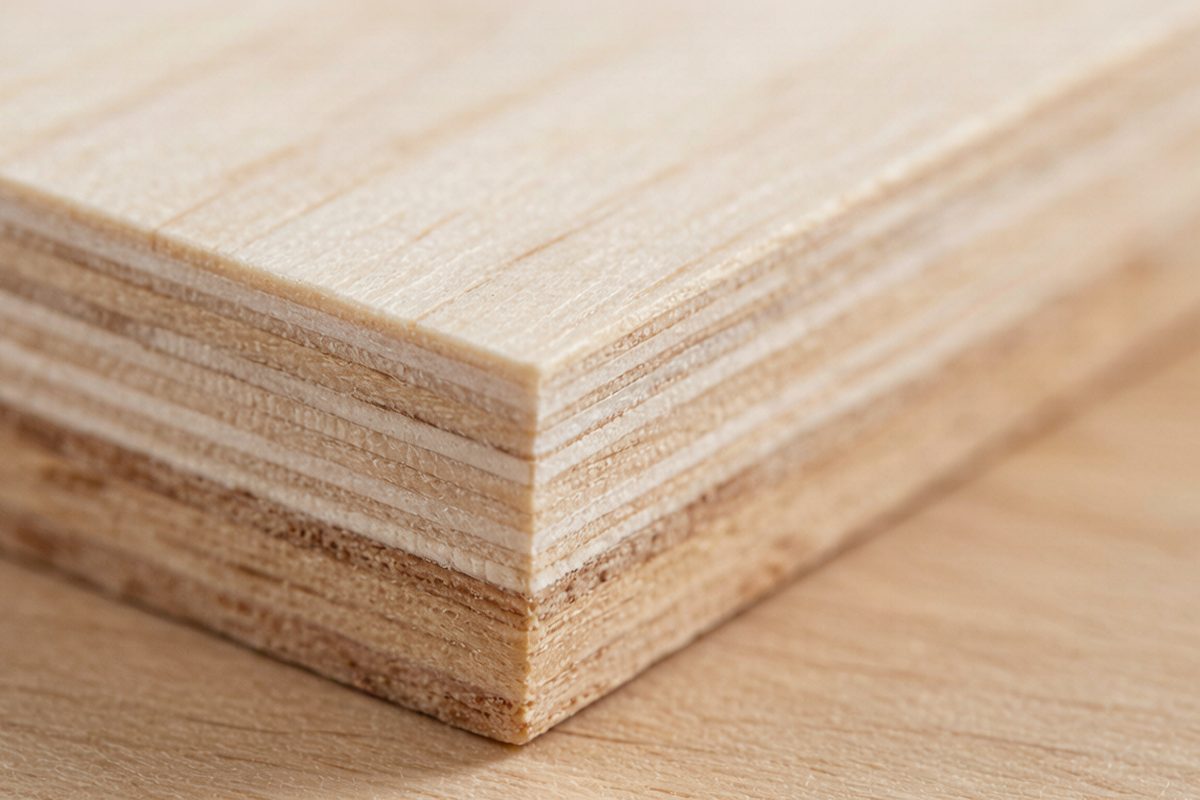
The core of a plywood panel determines how it machines, how much it weighs, how well it holds a fixing and how it behaves when the humidity changes. Two cores dominate the export market.
## Birch plywood
Rotary-cut birch veneers are laminated into a dense, uniform panel with almost no voids. That makes it the substrate of choice for CNC routing, laser cutting, exposed-edge furniture, die-making and any application where the edge of the panel will be seen.
Density typically sits between 640 and 720 kg/m³. Screw-holding is excellent, and because the lay-up is consistent, the panel behaves predictably under load.
## Poplar core plywood
Poplar core panels are lighter and less expensive. Density is usually 500–620 kg/m³, which is a genuine advantage when you are shipping assembled furniture or building a structure where weight matters.
The trade-off is that the core is softer and more likely to contain small voids. It machines acceptably but does not give the clean edge finish of birch, so it is normally used where the panel will be faced, edged or painted.
## How to decide
Ask three questions. Will the edge of the panel be visible? Will the panel be machined with a router? Does the finished item need to be as light as possible?
Three yes answers point to birch. Mostly no answers point to poplar core with a decorative face — which is what most furniture and joinery production actually uses.
## The middle ground
Eucalyptus core sits between the two: denser than poplar, cheaper than birch, with good machining behaviour. For many furniture and interior panel applications it is the best value specification available.