Melamine Faced Board: Decorative Surface, Substrate and Edging
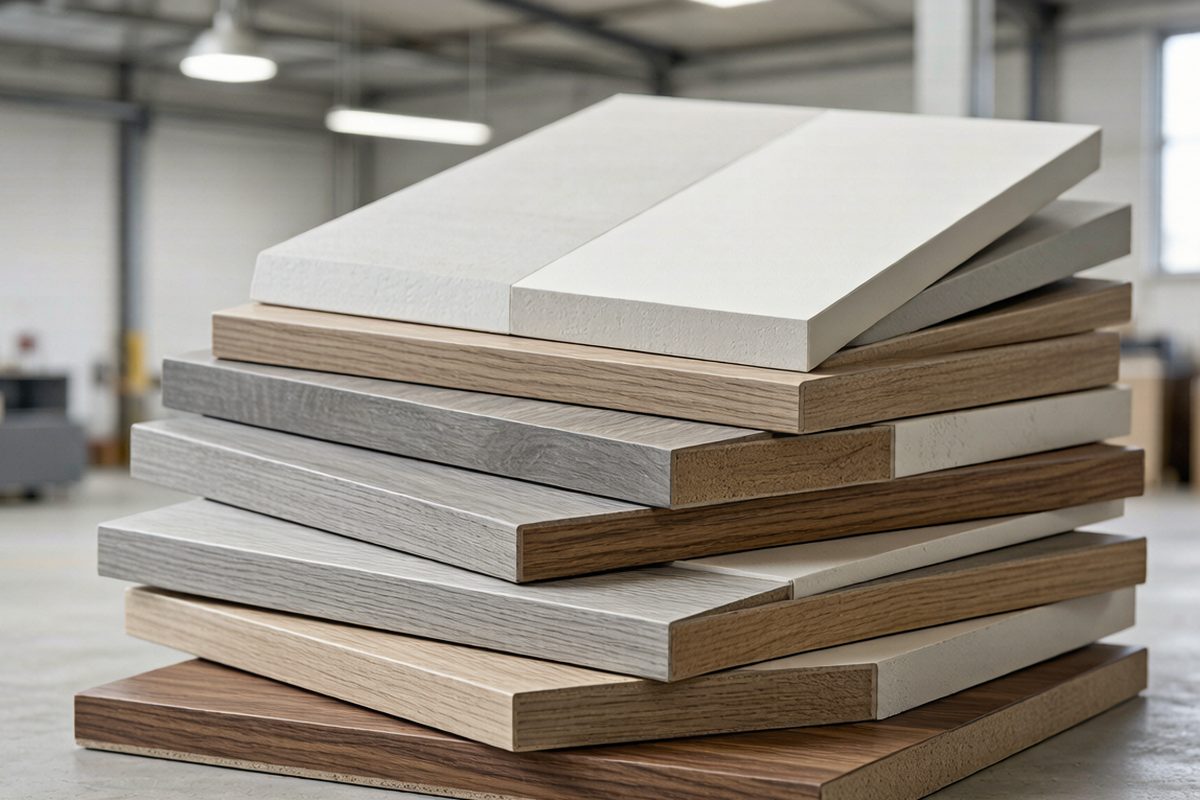
Melamine faced board is bought as a single product but specified as three decisions. Understanding each one prevents the most common quality complaint in furniture production: a panel that looks right on the face and fails at the edge.
## The decorative surface
Melamine impregnated paper is pressed onto the substrate under heat and pressure. Paper weight and resin quality determine how the surface resists scratching, moisture and household chemicals. A heavier paper with a well-cured resin layer will still look correct after years of use; a thin paper will mark early.
Surface finish also matters. Textured and structured finishes hide fingerprints and small scratches far better than high-gloss, which is why matte and woodgrain surfaces dominate commercial furniture.
## The substrate
The same decorative paper can be pressed onto plywood, MDF or blockboard, and each behaves differently. Plywood gives screw-holding and moisture resistance. MDF gives a flawless machined edge and uniform density for routing. Blockboard gives low weight with good fixing strength.
Specify the substrate per component rather than per project — a cabinet carcase, a door front and a shelf do not necessarily want the same board.
## Edging
The edge is where most melamine furniture fails. Raw board edges absorb moisture and swell, so every exposed edge must be banded. Matching ABS edge banding in the same colour and finish as the face is the standard solution, and pre-glued or laser-applied banding gives the cleanest result.
Order the edge banding with the panels, from the same batch where possible, so the colour matches. Buying it later from a different supplier is the usual cause of visible mismatch on a finished run.